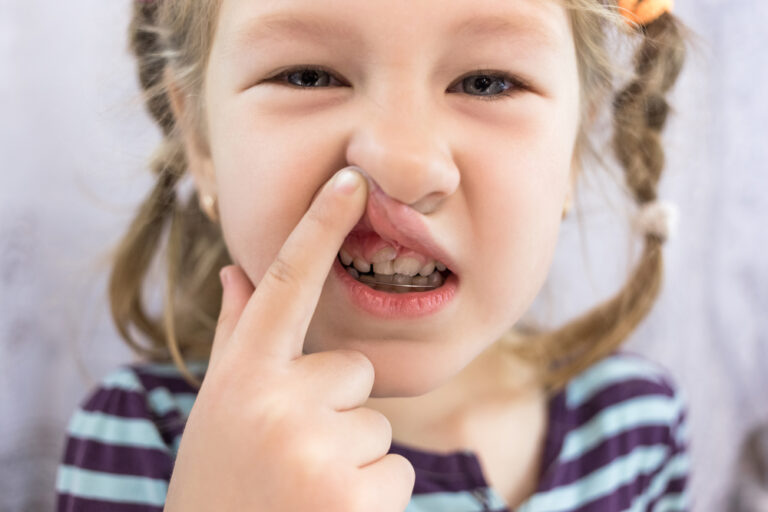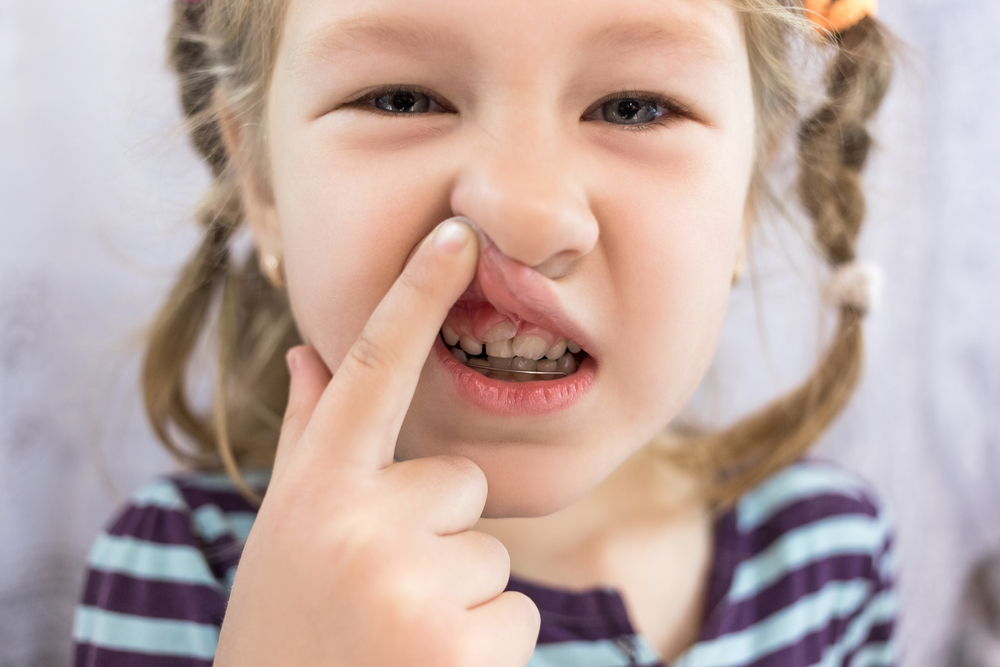
The seven signs that a child may need orthodontic treatment are crowded or blocked-out teeth, baby teeth lost much earlier or later than usual, upper and lower teeth that don’t meet correctly, thumb or finger sucking past age 5, constant mouth breathing, a jaw that clicks or shifts, and trouble chewing or frequent cheek biting. Any one of them is a reason to book an orthodontic evaluation, and the American Association of Orthodontists recommends one by age 7 even if you see none of them.
At Chestnut Dental the evaluation is free, and most children who come in are monitored rather than treated.
Tufts D.M.D. summa cum laude · Certificate in Orthodontics, Tufts · Last reviewed October 2026
Most parents notice something before anyone says the word “orthodontist.” A hygienist mentions crowding at a cleaning. A school photo shows a front tooth coming in sideways. A friend in Wellesley says her 8-year-old just got an expander, and you start looking at your own kids’ teeth.
One sign is a reason to get a look, not a verdict. Below, the orthodontists at Chestnut Dental explain what each sign can point to, how soon to book, and which changes between ages 7 and 10 are usually normal.
What are the signs a child needs orthodontic treatment?
These are the signs our orthodontists look for at a first evaluation, with what you’d notice at home and how soon to call. Tap a sign to jump to its explanation.
| Sign | What you’d notice at home | How soon to book |
|---|---|---|
| 1. Crowded or blocked-out teeth | Teeth overlapping, or an adult tooth coming in behind a baby tooth | Book soon |
| 2. Early or late tooth loss | A baby tooth lost to decay or injury, or teeth far behind classmates | Book soon |
| 3. Teeth that don’t meet correctly | Upper teeth inside the lower, lower teeth in front, or front teeth that never touch | Book now for crossbite or underbite |
| 4. Thumb sucking past 5 | The habit continues as the adult front teeth arrive | Book soon |
| 5. Constant mouth breathing | Lips apart at rest, mouth open while asleep | Mention at evaluation |
| 6. Jaw clicking or shifting | The lower jaw slides sideways when your child bites down | Book soon |
| 7. Trouble chewing or cheek biting | Chews on one side, avoids some foods, bites the inside of a cheek often | Mention at evaluation |
When do these signs usually show up?
Most of the seven signs appear between about ages 6 and 12, while a child has a mix of baby and adult teeth and the jaw is still growing.
That’s the window when an orthodontist can guide growth instead of only moving teeth, and it’s why the AAO sets the first evaluation at age 7. If your child is already 9 or 10, there’s still plenty of growth to work with; our post on what age a child should first see an orthodontist explains what that first visit checks.
1Are your child’s teeth crowded, overlapping, or coming in behind baby teeth?
Crowded, overlapping, or blocked-out teeth can mean the jaw doesn’t have room for every adult tooth, and an orthodontist can tell whether that space will open up on its own.
Adult front teeth are much larger than the baby teeth they replace, so they often look crowded when they first come in. Farther back, the baby molars are wider than the adult teeth that follow them, and when they fall out, usually between about 9 and 12, they free up a little room.
Is some crowding normal at age 7 to 10?
Yes. Mild crowding of newly erupted lower front teeth often eases as the arch develops. What an orthodontist checks is whether there’s enough total space for the adult teeth still to come, and that takes an exam and usually an x-ray.
When does crowding need an orthodontist?
When an adult tooth comes in behind a baby tooth that hasn’t loosened, heads toward the wrong spot, or seems stuck. A tooth erupting out of position, called ectopic eruption, can press on the roots of the tooth beside it. Parents most often notice this as adult teeth growing in behind baby teeth.
2Did your child lose baby teeth much earlier or later than classmates?
Losing baby teeth much earlier or later than other kids the same age can leave adult teeth without a clear path into place.
Baby teeth hold space for the adult teeth forming underneath and guide them in. Some variation is normal; the AAO’s concern is with timing that’s far off in either direction.
Why does losing a baby tooth early matter?
When a baby molar comes out early from decay or an injury, the neighboring teeth can drift into the gap and block the adult tooth below. A space maintainer, a small appliance that holds the gap open, prevents that.
What if baby teeth won’t fall out?
A baby tooth that stays firm after the adult tooth has started to show, or one side of the mouth far behind the other, can mean the adult tooth is missing, blocked, or coming in at an angle. Only an x-ray shows which. Our posts on baby teeth that won’t fall out and when adult teeth usually come in cover the typical timeline.
3Do your child’s upper and lower teeth meet the wrong way?
Upper and lower teeth that meet in the wrong order, such as a crossbite, underbite, deep overbite, or open bite, can affect how the jaw grows and are the signs most likely to need early treatment.
A lower jaw that sits noticeably ahead of or behind the upper jaw can also change how the chin and lips look as a child grows. Reading a bite is the core of Dr. Chason’s practice: he has focused on growth and development and functional appliance therapy since joining Chestnut Dental in 1999.
What do overbite, underbite, crossbite, and open bite look like?
| Bite | Side view | What you see when your child bites down |
|---|---|---|
| Typical bite | Upper front teeth sit slightly in front of and over the lower front teeth. | |
| Deep overbite | Upper front teeth cover most of the lower front teeth. Usually corrected later in one round of treatment. | |
| Protruding front teeth | Upper front teeth stick out well past the lower ones, with a visible gap front to back. More likely to chip in a fall. | |
| Underbite | Lower front teeth sit in front of the upper front teeth. | |
| Open bite | Back teeth touch but the front teeth don’t meet, leaving a gap. Often linked to thumb sucking. | |
| Crossbite | Some upper teeth sit inside the lower teeth, often on one side. The lower jaw may slide sideways to close. (Front view.) |
Which bite problems shouldn’t wait?
A crossbite that makes the lower jaw slide to one side, and an underbite caused by jaw growth, are the clearest cases for early treatment. A palatal expander widens the upper jaw by working on a seam in the palate that opens more easily in younger children. Upper front teeth that stick out far are more likely to break in a fall or a game, so for kids in contact sports, earlier correction and a properly fitted mouthguard both help.
Most overbites can wait for a single round of braces or Invisalign once the adult teeth are in. Our post on whether a child really needs two rounds of braces explains which problems are treated early and which are better left alone.
4Is your child still sucking a thumb or finger after age 5?
Thumb or finger sucking that continues past age 5 can push the upper front teeth forward, leave a gap where the front teeth don’t meet, and narrow the upper jaw.
Thumb sucking is normal for toddlers. It starts to matter once the adult front teeth arrive, around ages 6 to 7, because steady pressure from the thumb moves those teeth as they settle. When the habit stops before the bite sets, many open bites close on their own. Read what thumb sucking does to teeth and our guide to pacifier and finger habits for ways to approach it at home first.
5Does your child breathe through the mouth most of the time?
A child who breathes through the mouth most of the time, awake or asleep, can develop a narrower upper jaw and a bite that doesn’t close properly.
When the mouth stays open, the tongue tends to rest low instead of against the roof of the mouth, and that tongue support helps the upper jaw grow to its full width. A narrow upper jaw is one cause of crossbites and crowding, which is why mouth breathing often shows up alongside signs 1 and 3.
6Does your child’s jaw click, pop, or shift when they bite?
A jaw that clicks, pops, or slides to one side when your child bites down can mean the teeth are steering the jaw into an off-center position.
In children, the most common cause is a crossbite: the upper jaw is narrow, so the lower jaw shifts sideways to let the back teeth meet, and the face can grow around that shift. One quick check at home is to watch the line between your child’s two lower front teeth as they close slowly. If it slides off to one side as the teeth meet, show an orthodontist. Pain, a jaw that locks, or trouble opening wide are reasons to call sooner.
7Does your child have trouble chewing, or keep biting a cheek?
Trouble biting into food, chewing on only one side, or often biting the inside of the cheek can mean the upper and lower teeth don’t fit together.
Outside of teething, eating shouldn’t hurt. In a typical bite, the outer edges of the upper back teeth hold the cheeks away from the chewing surfaces. When the teeth don’t line up, a child may favor one side, avoid foods like apples or raw carrots, or keep catching the inside of a cheek.
What looks worrying but is usually normal?
Several changes between ages 6 and 10 alarm parents but usually sort themselves out as the adult teeth finish coming in.
Use this table to tell a normal stage from one of the seven signs.
| What you notice | Usually normal when | Worth a look when |
|---|---|---|
| A gap between the upper front teeth | Ages 6 to 9, before the adult canines come in. The gap often narrows as they erupt. | The gap is wide, or it’s still there after the adult canines are in. |
| New front teeth look big or darker | Adult teeth are larger and naturally a shade more yellow than baby teeth. See why new adult teeth can look yellow. | One tooth differs in color from its neighbor, or shows white or brown spots. |
| Lower adult teeth behind baby teeth | The baby tooth is already loose and comes out on its own soon after. | The baby tooth is still firm while the adult tooth comes in behind it. |
| Mild crowding of new lower front teeth | Ages 6 to 8, as the front teeth first come in. | The overlap gets worse over time, or an adult tooth looks blocked. |
| Losing teeth on a different schedule than a sibling | Timing differs by a few months from a brother, sister, or classmate. | One side of the mouth is far behind the other, or a baby tooth was lost early to decay. |
My child has one of these signs. What should I do next?
Book a free evaluation with an orthodontist; most children who come in with a sign are monitored with short check-ins rather than treated, and at Chestnut Dental those monitoring visits are free too.
Do I need a referral from our dentist?
No. You can book directly at any of our three offices. If your child already sees a Chestnut Dental pediatric dentist, the orthodontist works from the same records.
What happens at the evaluation?
You sit down with the orthodontist who would treat your child, along with a treatment coordinator. The orthodontist takes a digital scan instead of putty impressions, reviews x-rays, and tells you whether your child needs treatment now, later, or not at all. Read more about how treatment works at Chestnut Dental and our Child & Adolescent Treatment options.
What if my two kids are at different stages?
Treat them as separate questions. A 9-year-old who hasn’t been evaluated is still in the window where early treatment can matter, while a 13-year-old with crowding is usually looking at a single round of braces or Invisalign. Ask for back-to-back consultations when you call, and each child gets a separate recommendation.
If your child has tooth pain, a dark spot, or bleeding gums, start with a pediatric dentist. Our guide to signs your child needs a pediatric dentist covers those.
Who will evaluate my child at Chestnut Dental?
Chestnut Dental has four orthodontists across Needham, Franklin, and Bedford, and all four completed two to three years of specialty residency after dental school.
| Orthodontist | Office | Training |
|---|---|---|
| Jonathan Chason, D.M.D. | Franklin | Tufts D.M.D. summa cum laude and Certificate in Orthodontics. Focus on growth and development and functional appliance therapy. Boston Magazine Top Dentist, 2019 to 2026. |
| Adam Donnell, D.M.D., M.S. | Needham | Board-certified. Harvard D.M.D.; orthodontic residency and M.S., University of Michigan. President, Massachusetts Association of Orthodontists. |
| Scott Harsfield, D.M.D. | Needham | Tufts D.M.D.; residency at Harvard School of Dental Medicine; Advanced Education Program in Orthodontics and Dentofacial Orthopedics, Tufts. |
| Erica Frenkel, D.M.D., Ph.D., M.S.D. | Bedford | Harvard D.M.D.; Ph.D. in microbiology, MIT; orthodontic residency and M.S.D., University of Washington. |
| Office | Families come from | Phone |
|---|---|---|
| Needham, 87 Chestnut Street | Needham, Wellesley, Newton, Dover, Dedham, Westwood | (781) 444-6650 |
| Franklin, 38 Pond Street, Suite 204 | Franklin, Bellingham, Medway, Wrentham, Norfolk, Milford | (508) 520-6660 |
| Bedford, 41 North Road | Bedford, Lexington, Concord, Burlington, Billerica, Carlisle | (339) 234-5075 |
Full bios are on Meet the Doctors, and you can browse before-and-after results from patients at each office.
Spotted one of these signs?
Book a free consultation with the orthodontist who would treat your child. If treatment isn’t needed yet, we’ll monitor at no cost until the timing is right.
Book a free consultationFrequently asked questions
- Can I tell at home whether my child needs braces?
- You can spot the signs, but you can’t confirm the need at home. Missing or blocked adult teeth only show on an x-ray, and how the jaws are growing takes a clinical exam. Use the checklist to decide whether to book, not whether to treat.
- My child has one of these signs but no pain. Should I still book?
- Yes. Most of these signs never hurt, which is why they go unnoticed. A crossbite or an adult tooth coming in out of place is easier to correct while a child is still growing.
- Will my child need braces if they show one of these signs?
- Not necessarily. Many children who come in with a sign are monitored with short check-ins until the timing is right, and some never need treatment. See when early treatment is actually necessary.
- Is an orthodontic evaluation free at Chestnut Dental?
- Yes. The first consultation is free, and so are monitoring visits for children who aren’t ready for treatment. If treatment is recommended, a treatment coordinator checks your insurance before anything is scheduled.
- Do I need a referral from our pediatric dentist?
- No. You can book directly at the Needham, Franklin, or Bedford office. If your child already sees a Chestnut Dental pediatric dentist, the orthodontist works from the same records.
- Our dentist hasn’t mentioned anything. Could my child still need an orthodontist?
- Yes. Parents often notice a bite or habit problem before anyone else, and the American Association of Orthodontists tells parents they don’t need to wait for a referral. A routine dental checkup isn’t an orthodontic evaluation.
- Are tightly packed baby teeth a sign of crowding later?
- Often, yes. Spaces between baby teeth are normal and leave room for the larger adult teeth. Baby teeth with no gaps at all can point to crowding once the adult teeth arrive.
Jonathan Chason, D.M.D.
Dr. Chason is an orthodontist at Chestnut Dental’s Franklin office and has treated Franklin-area families since 1999. He earned his D.M.D. summa cum laude at Tufts University School of Dental Medicine and stayed at Tufts for his Certificate in Orthodontics. His practice focuses on growth and development, functional appliance therapy, and Invisalign clear aligner therapy. Boston Magazine has named him a Top Dentist every year from 2019 through 2026.
Source: American Association of Orthodontists, Orthodontics for Children. This article is general information, not a diagnosis; an orthodontic evaluation is the only way to know what your child needs.